Iranian tour operators get acquainted with Tatarstan's hospitality as part of an advertising tour
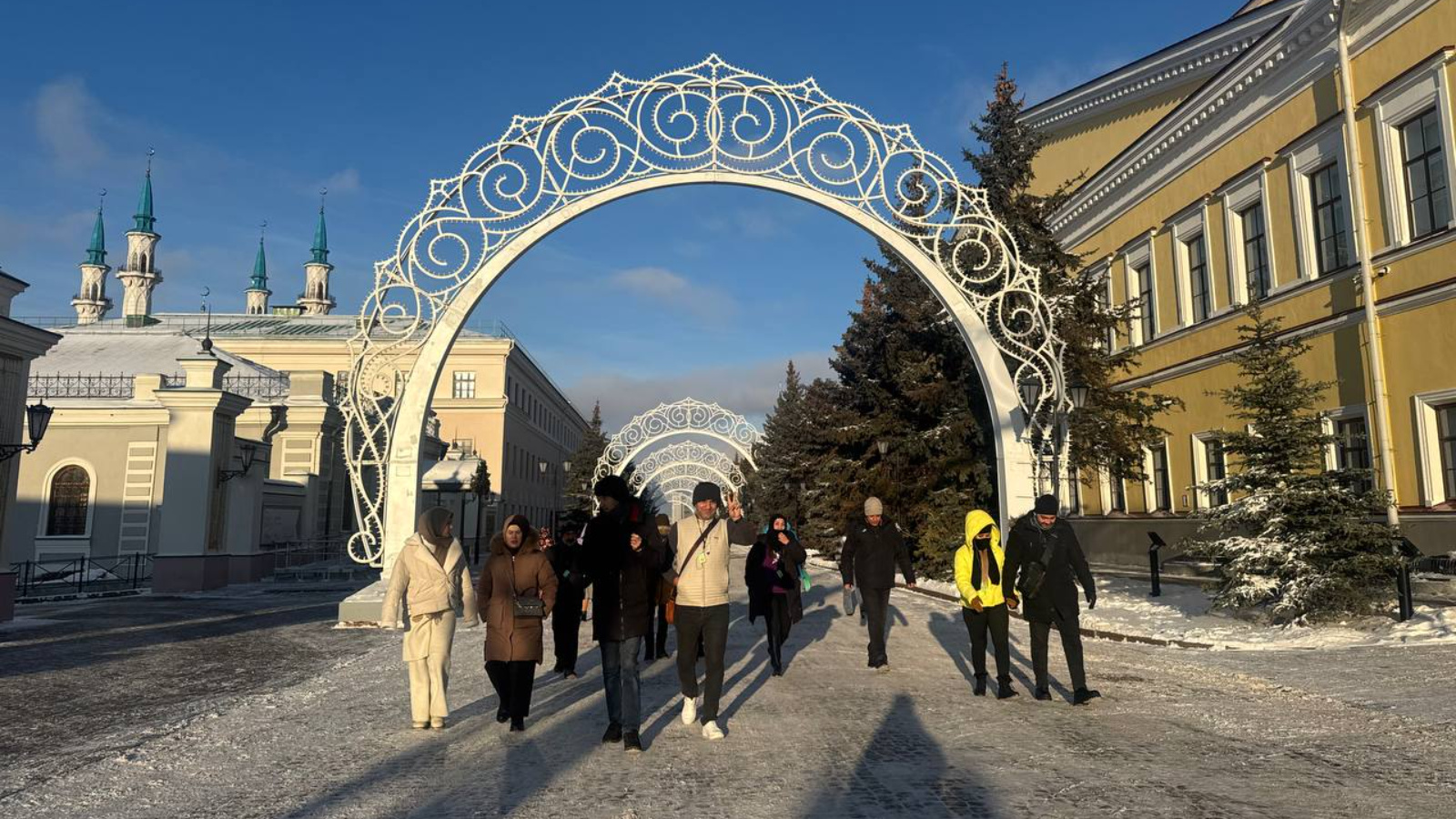
A delegation of 17 Iranian tour operators is getting acquainted with the tourism potential of Tatarstan during a visit along the route of the "Three Capitals of Russia". The purpose of the tour, organized by the State Committee for Tourism of the Republic of Tatarstan and Intourist, is to strengthen cooperation and increase the tourist flow from friendly countries.
From December 16 to 18, 2025, a delegation of 17 representatives of travel companies of the Islamic Republic of Iran visited the Republic of Tatarstan on a working visit. The promotional and information tour was organized by the State Committee of the Republic of Tatarstan for Tourism in cooperation with the Intourist tour operator in order to strengthen cooperation and attract tourists from friendly countries.
The program of the stay will allow the guests to comprehensively assess the tourist potential of the region. The delegation got acquainted with the historical heritage and modern infrastructure.
The program included a sightseeing tour of Kazan with a visit to the Kazan Kremlin, a UNESCO World Heritage Site, and a tour of the city's hotels. The participants were particularly impressed by a trip to the island-city of Sviyazhsk, where they saw ancient cathedrals and a unique museum of wood, as well as visited the alpaca park. As part of the business part, a presentation of Tatarstan's tourism potential was held with the participation of the Chairman of the RT State Committee on Tourism.
The visit is part of a tour of Russia. Before arriving in Kazan, the delegation had already familiarized itself with the possibilities of Moscow, and after Tatarstan, they will have a program in St. Petersburg. This trip through the "Three Capitals of Russia" became the practical embodiment of the current agreement between the capitals — Kazan, Moscow and St. Petersburg, aimed at creating and promoting joint interregional routes.
This work is aimed at achieving the goals of the national project "Tourism and Hospitality" to increase the export of travel services three times by 2030.